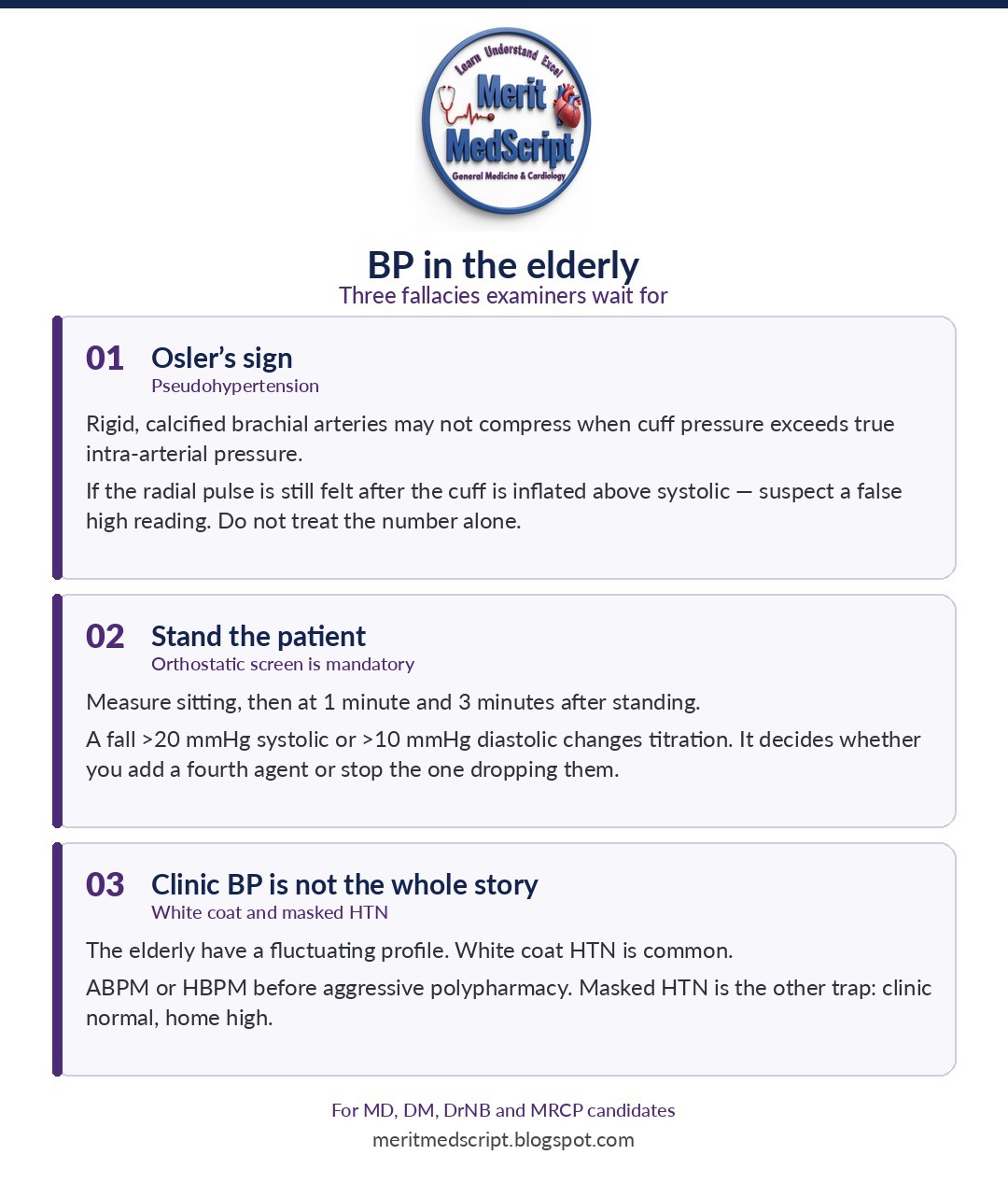
 Cardiology Clinical Skills: Evaluating BP in Elderly
(The "Red Flags" & Fallacies)
Examiners actively look for these three specific clinical pearls:
1. Pseudohypertension (The Osler Maneuver):
Concept: Heavily calcified, rigid brachial arteries may not compress even when the BP cuff pressure exceeds intra-arterial pressure, giving a falsely high reading.
Bedside Test: Osler's Sign. If the radial pulse remains palpable even after the cuff is inflated above the systolic pressure, suspect pseudohypertension.
2. Orthostatic HTN Screening (Mandatory):
BP must be measured sitting, and then at 1 minute and 3 minutes after standing. A drop of >20 mmHg systolic or >10 mmHg diastolic strictly alters your drug titration strategy.
3. White Coat & Masked Phenomena:
The elderly have a wildly fluctuating BP profile. White coat hypertension is extremely common. ABPM or HBPM is virtually mandatory before initiating aggressive polypharmacy.
Comments
Post a Comment
Join the academic discussion. Share your clinical insights, questions, or perspectives below.